
Washington golf is full of contrasts.
On one side, you have Chambers Bay: wide, rumpled, windswept, and staring out over Puget Sound. On another, you have Sahalee: tight, green, and framed by towering Pacific Northwest trees. Head east, and the game opens into big-sky golf at Gamble Sands and Wine Valley.
That variety is what makes Washington such a great place to start a Pacific Northwest famous-holes series. These holes are not all famous for the same reason. Some hosted major championships. Some are known for scenery. Some are famous because they ask one simple question: how much risk are you willing to take?
1. Chambers Bay No. 18 — The U.S. Open Finish Nobody Forgot
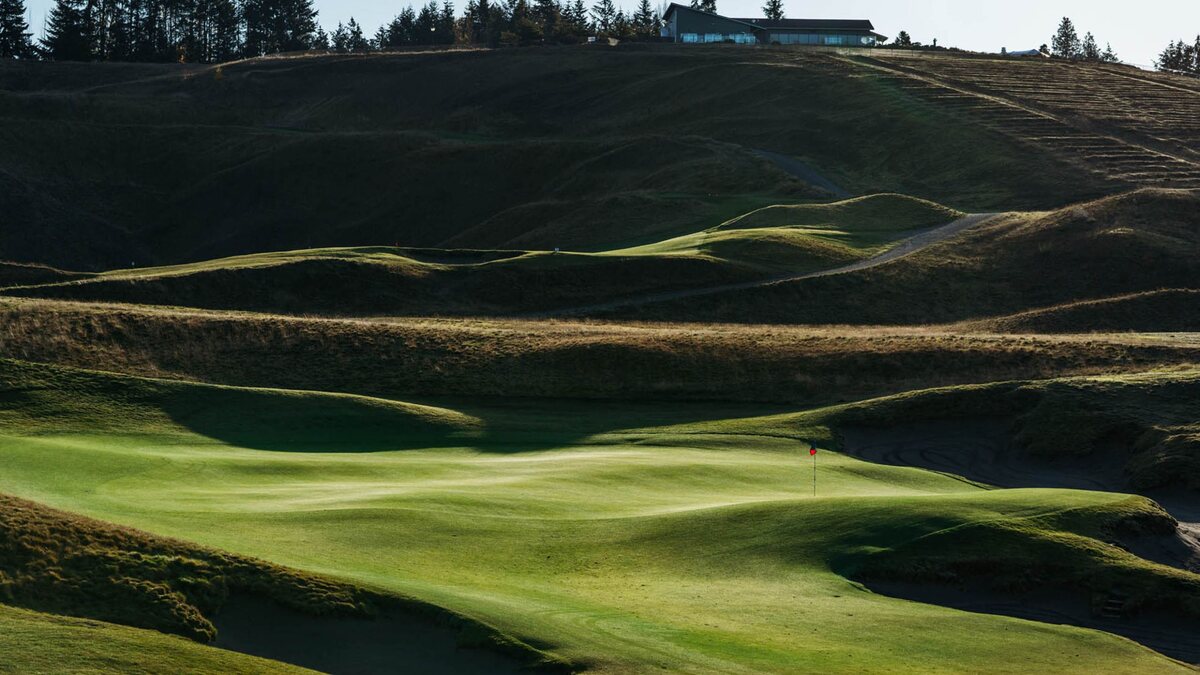
Photo: The Golfer’s Journal, used with permission.
The 18th at Chambers Bay became part of U.S. Open history in 2015. Jordan Spieth was chasing his second straight major, and Dustin Johnson had a chance to win or force a playoff on the final green. Johnson reached the par-5 18th in two, then three-putted from close range as Spieth walked away with the championship. Chambers Bay’s own championship recap calls the moment a dramatic climax that cemented the course’s place in Pacific Northwest golf history.
Why it belongs: It is the most famous modern golf moment in Washington.
2. Chambers Bay No. 17 — “Derailed”
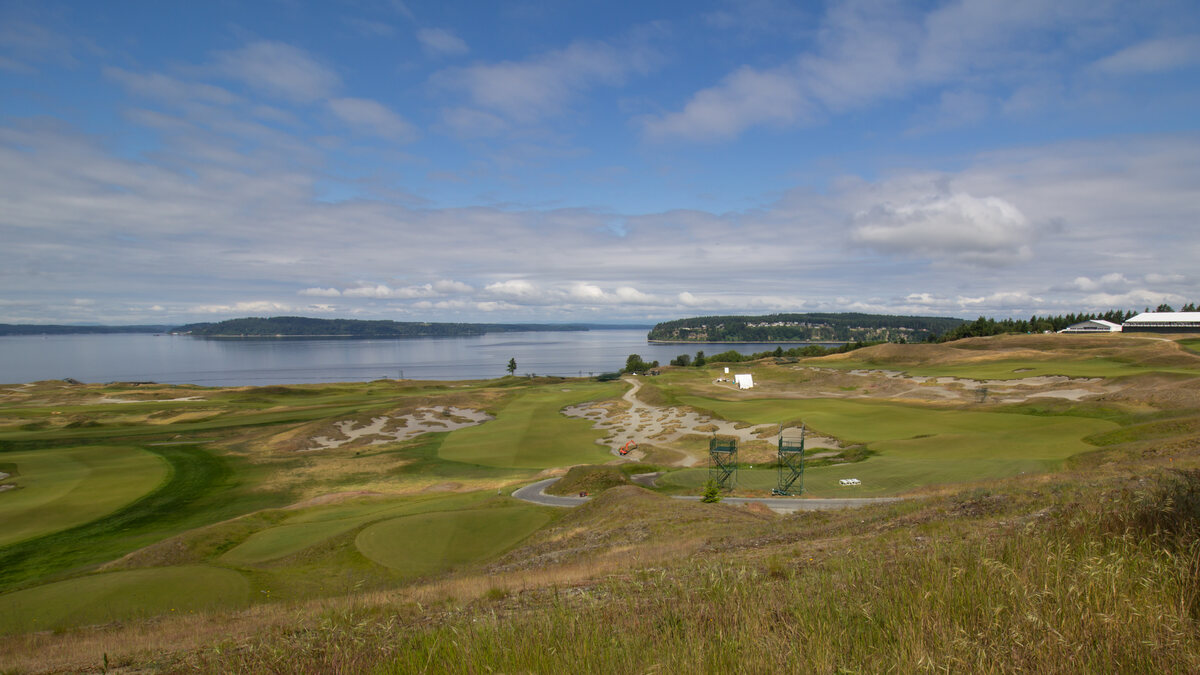
Photo: Atomic Taco, CC BY-SA 2.0, via Wikimedia Commons. Course view, not the exact hole.
Chambers Bay’s 17th is a dramatic par 3 set along the water, with an active rail line running beside the hole. Its nickname, “Derailed,” fits the setting perfectly.
Why it belongs: It is one of the most visually memorable par 3s in the Northwest.
3. Chambers Bay No. 15 — “Lone Fir”
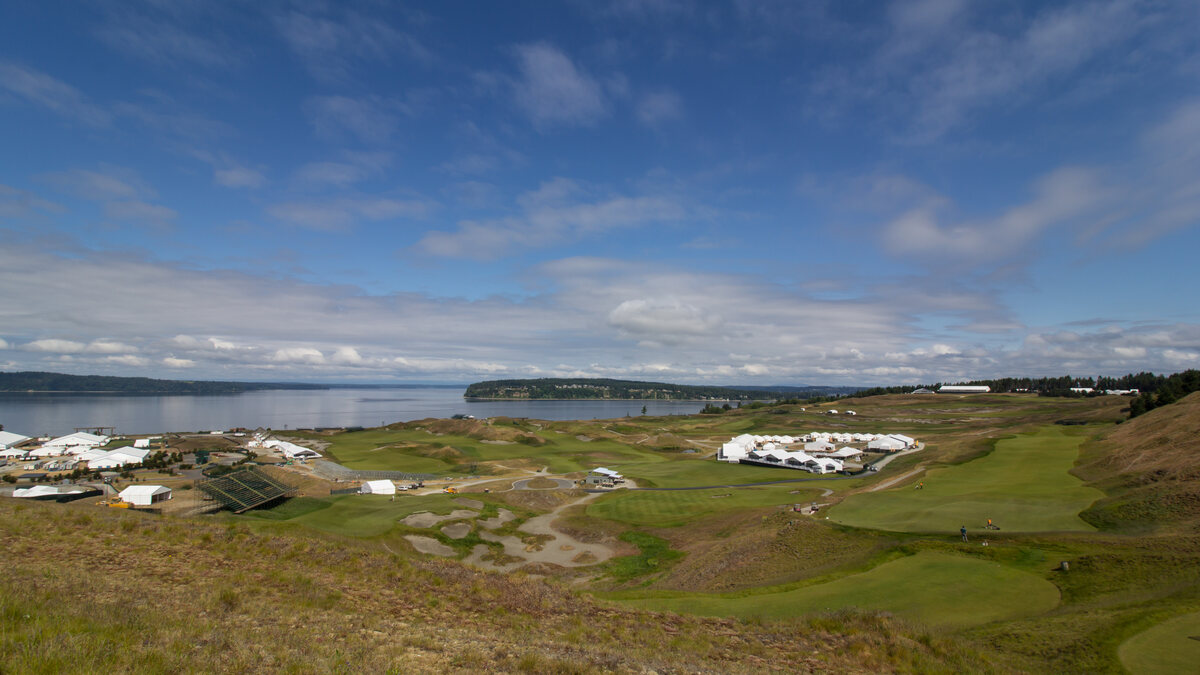
Photo: Atomic Taco, CC BY-SA 2.0, via Wikimedia Commons. Course view, not the exact hole.
The 15th at Chambers Bay is known as “Lone Fir” because the only tree on the course sits behind the par-3 green. The USGA described it as the layout’s lone tree and one of the course’s defining visual features.
Why it belongs: On a treeless links-style property, one tree can become famous.
4. Sahalee’s Championship Closing Stretch — Pressure Between the Trees
Sahalee Country Club has hosted the 1998 PGA Championship, the 2016 KPMG Women’s PGA Championship, and the 2024 KPMG Women’s PGA Championship. Vijay Singh won the 1998 PGA Championship there with a final-round 68 for his first major title.
Why it belongs: Sahalee is the opposite of Chambers Bay. Instead of width and wind, it gives players corridors, trees, and pressure.
5. Sahalee North No. 8 — Jack Nicklaus Through the Trees
Sahalee’s own course tour tells a great local legend: Jack Nicklaus once made eagle on North No. 8 during a course-record 67, hitting a shot through a narrow gap between trees.
Why it belongs: It captures Sahalee in one story: championship talent trying to solve a forest.
6. Gamble Sands No. 18 — Big Finish in Big Country
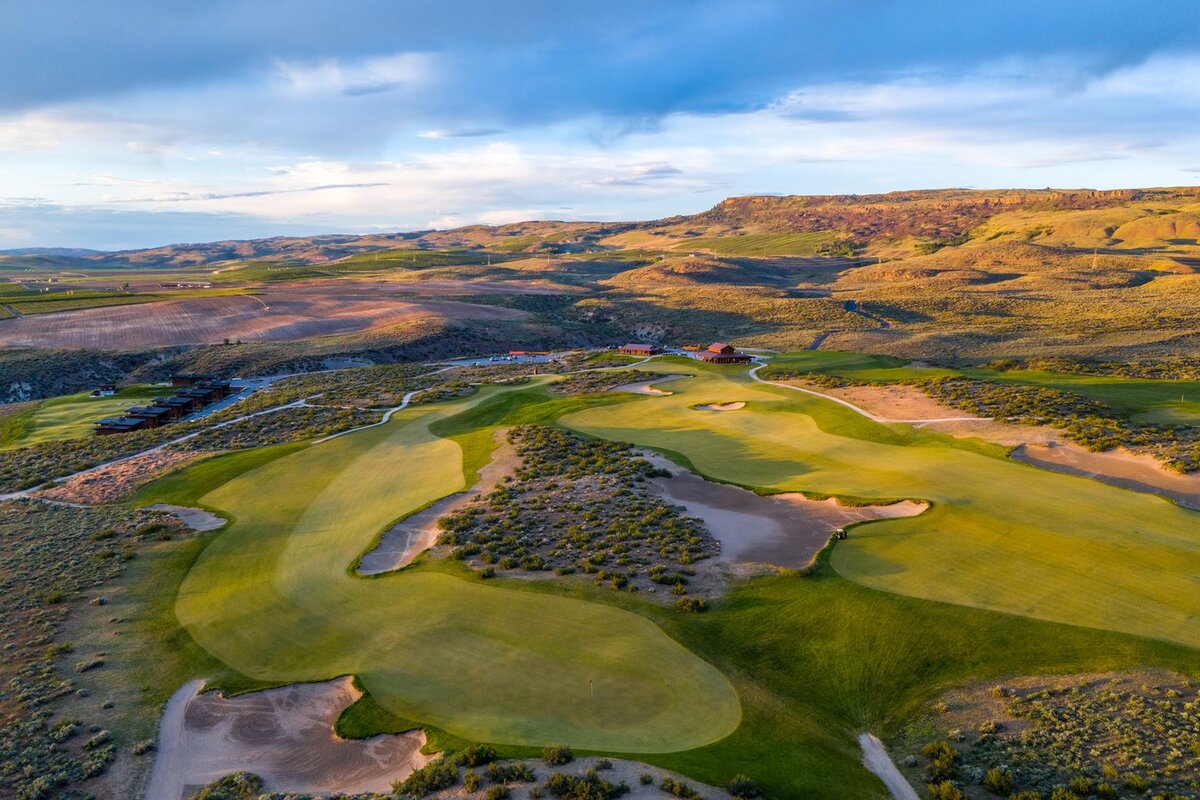
Photo: Gamble Sands Golf Club / Brian Oar, via GolfPass.
Gamble Sands has become one of Washington’s great destination-golf names. The resort says it now features two 18-hole courses from David McLay Kidd, plus Quicksands, a 14-hole short course.
Why it belongs: The finishing hole at Gamble Sands gives Washington golf a different identity: wide, strategic, sandy, and huge.
7. Gamble Sands No. 2 — The Early Green Light
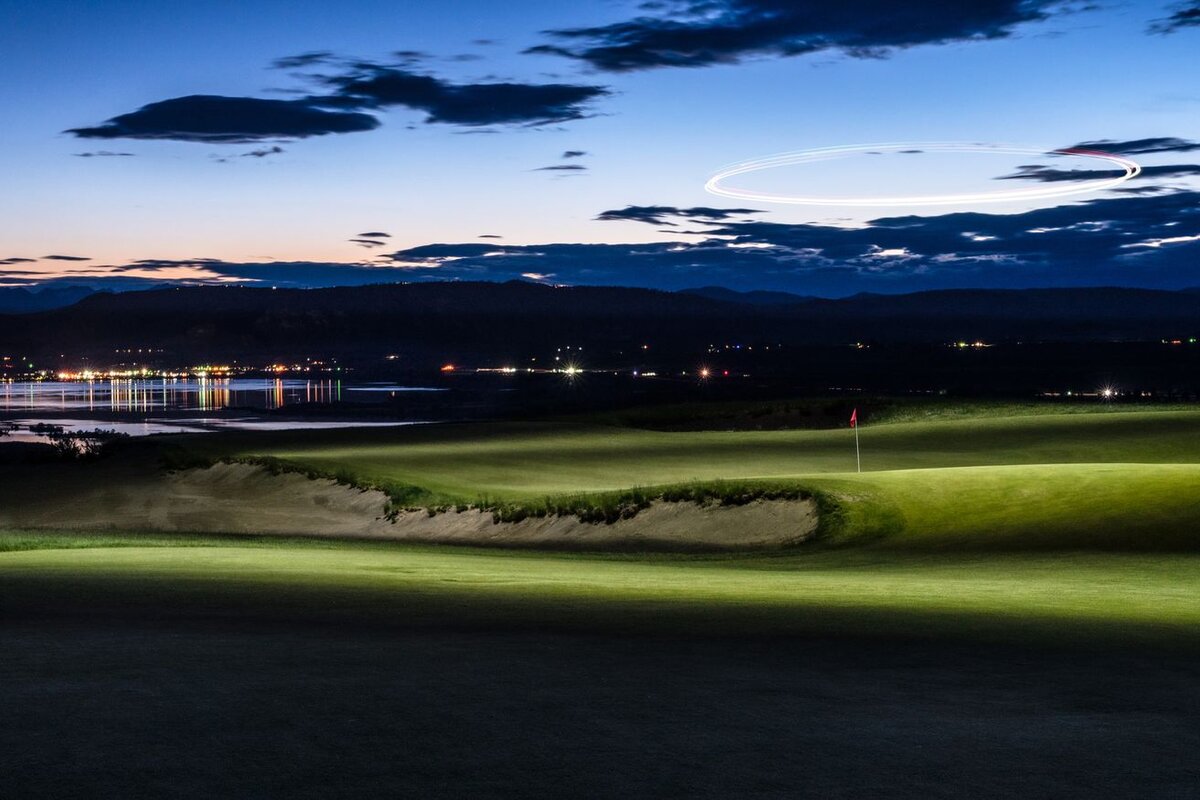
Photo: Gamble Sands Golf Club / Brian Oar, via GolfPass.
Gamble Sands is known for width and options, and the second hole is a reachable par 4 with Columbia River views. Washington Golf describes the Sands course as firm, fescue-based, and especially memorable on holes like the reachable par-4 second.
Why it belongs: It is the kind of hole that gets a group talking early.
8. Wine Valley No. 18 — Walla Walla’s Big-Scale Closer
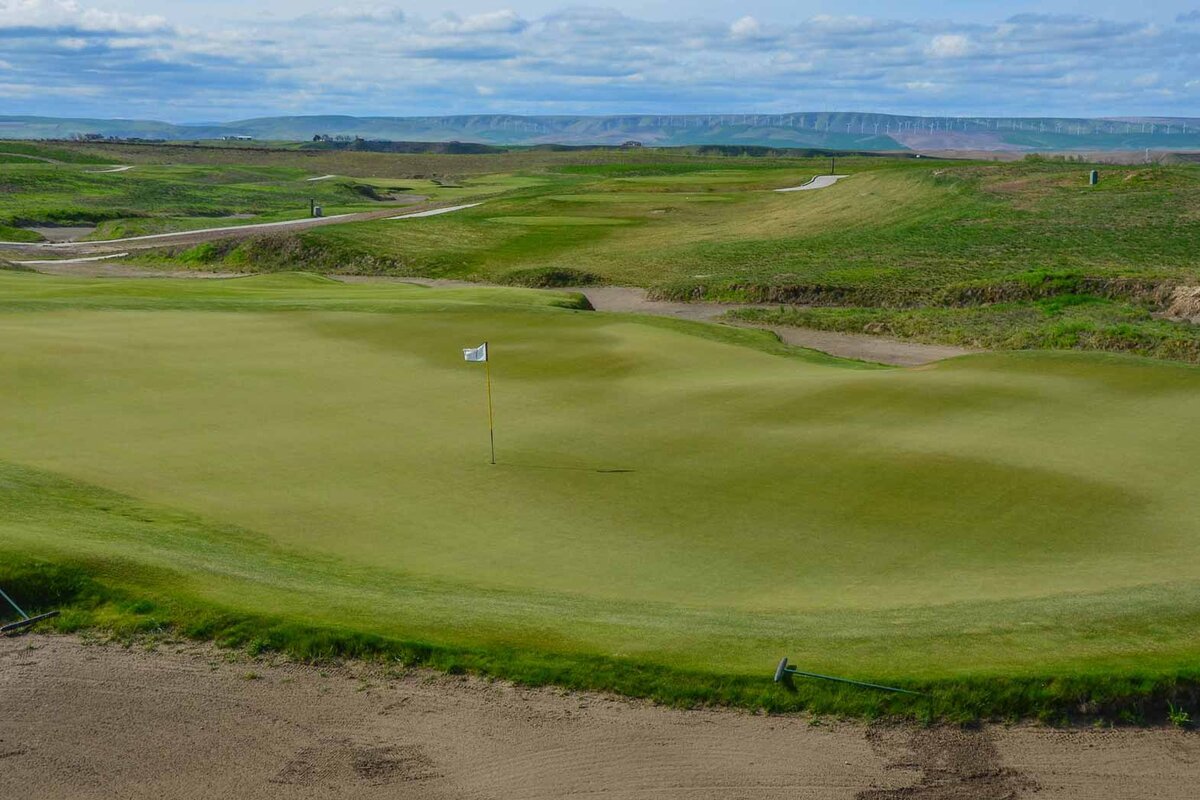
Photo: Patrick Koenig, via GOLF.com. Course view, not the exact hole.
Wine Valley’s 18th is a strong finishing hole in Walla Walla wine country. The club’s hole-by-hole page describes it as a par 4 framed by a wash and playing into the largest green on the course.
Why it belongs: It shows the inland Northwest side of golf: open, exposed, strategic, and shaped by wind.
9. Gold Mountain Olympic Course No. 18 — Public Golf with Championship Credibility
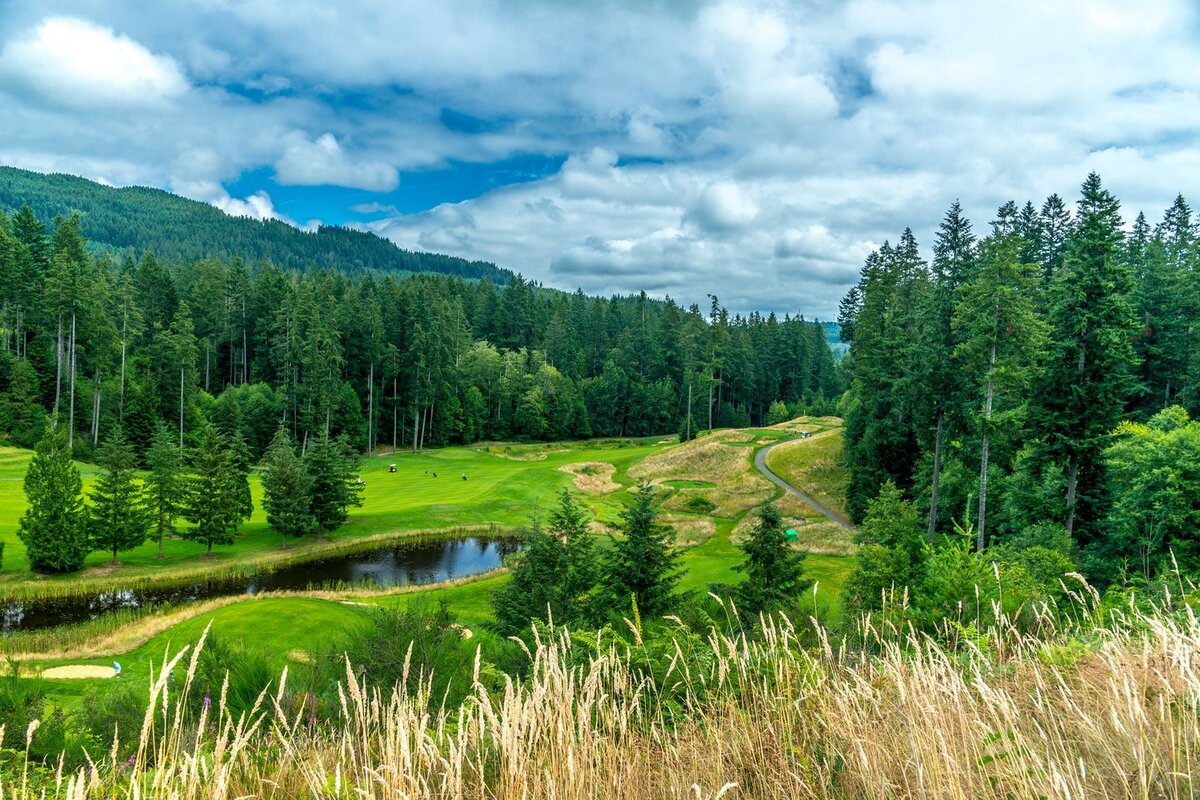
Photo: GolfPass.
Gold Mountain’s Olympic Course has become one of Washington’s most respected public golf venues. The USGA notes that the Olympic Course, designed by John Harbottle III and opened in 1996, hosted the 2006 U.S. Amateur Public Links and was selected to host the 2011 U.S. Junior Amateur.
Why it belongs: It proves that important golf in Washington is not limited to private clubs or resort destinations.
10. Chambers Bay No. 12 — The Temptation Hole
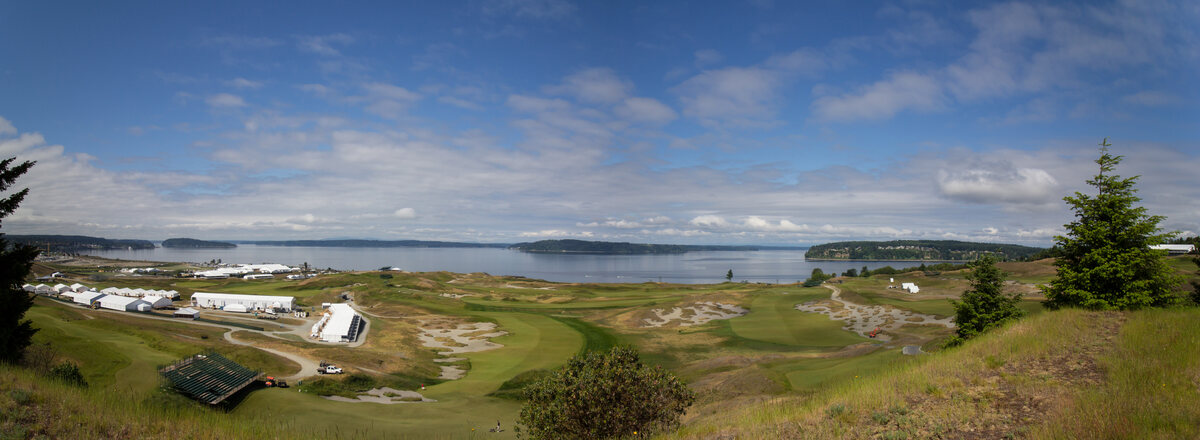
Photo: Atomic Taco, CC BY-SA 2.0, via Wikimedia Commons. Course view, not the exact hole.
Chambers Bay’s 12th is a short par 4 that tempts players to chase a big moment. Course-preview sources describe it as an uphill, drivable par 4 with a narrow target.
Why it belongs: It is the kind of hole that turns a normal round into a decision-making test.
Final Thought
Washington golf is not one thing.
It is U.S. Open drama at Chambers Bay. It is major-championship pressure at Sahalee. It is public-golf credibility at Gold Mountain. It is wide-open inland strategy at Gamble Sands and Wine Valley.
That variety is the story. In Washington, famous golf holes can sit beside Puget Sound, hide between evergreens, or stretch across the dry side of the state with room to swing away.